
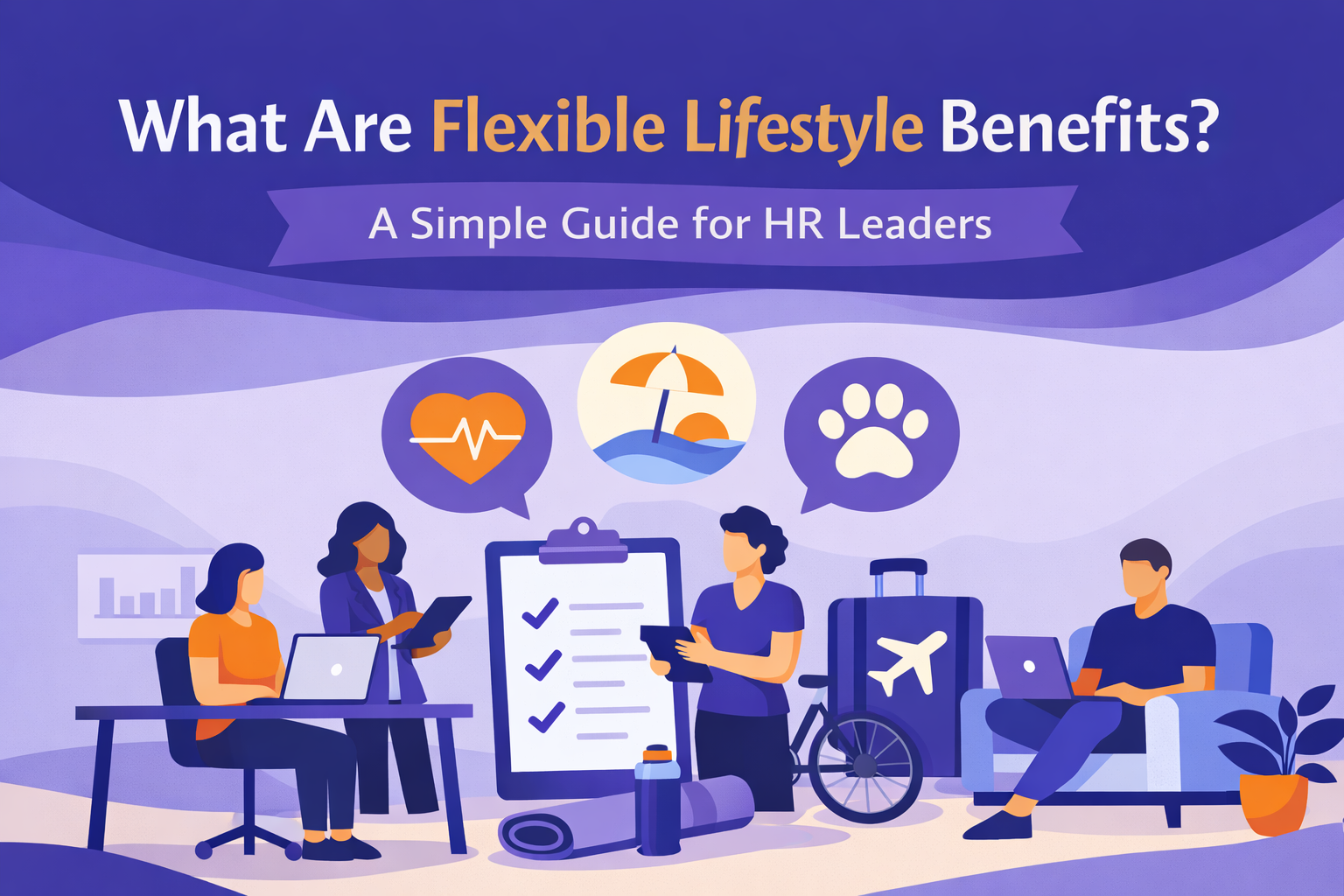
HR leaders are juggling more priorities than ever. Between recruitment, retention, engagement, and compliance, it’s easy to feel like employee benefits are a one-size-fits-all checklist. But today, employees expect more: benefits that fit their real lives. That’s where flexible lifestyle benefits come in.
What Flexible Lifestyle Benefits Actually Are
Flexible lifestyle benefits — also called lifestyle spending accounts — are employer-funded allowances that employees can spend on what matters most to them. Unlike traditional perks, which are pre-determined by the employer, flexible benefits let employees choose the categories and items that best support their lifestyle, wellness, and personal growth.
Examples of how employees can use their flexible benefits:
- Wellness & Fitness: gym memberships, meditation apps, nutrition programs
- Learning & Career Growth: online courses, certifications, coaching
- Family & Caregiving: childcare, eldercare, pet care expenses
- Experiences & Lifestyle: travel, hobbies, entertainment
The key difference: employees aren’t getting what HR thinks they need — they’re getting what they actually want.
Why HR Leaders Should Care
Flexible lifestyle benefits solve multiple challenges at once:
- Drive Employee Engagement – When employees choose their own benefits, usage skyrockets and satisfaction increases.
- Improve Retention – Employees feel valued and understood, which reduces turnover.
- Simplify Benefits Administration – Modern platforms automate tracking and reporting, making life easier for HR teams.
- Support a Diverse Workforce – Multi-generational and distributed teams have different needs; flexible benefits allow everyone to get what matters most.
By giving employees control and choice, HR leaders can create programs that truly resonate, without adding complexity or cost.
How Flexible Benefits Differ From Traditional Perks
| Traditional Perks | Flexible Lifestyle Benefits |
| One-size-fits-all | Personalized choices for each employee |
| Low utilization | High adoption and engagement |
| HR decides value | Employees decide value |
| Hard to scale | Easy to scale and budget |
This shift from “pre-set perks” to flexible spending accounts is not just a trend—it’s the future of benefits for small and mid-sized businesses.
Implementing Flexible Lifestyle Benefits Successfully
While flexible benefits are simple in concept, they work best when paired with the right platform and communication strategy:
- Choose a user-friendly platform – Employees should easily browse options and track their allowance.
- Set a clear budget – Define monthly or annual allowance amounts that make sense for your team size and budget.
- Communicate clearly – Explain categories, examples, and how employees can maximize their benefits.
- Track and optimize – Monitor usage and feedback to continually improve the program.
The Takeaway
Flexible lifestyle benefits are no longer a “nice-to-have.” They’re a strategic tool for improving engagement, retention, and employee satisfaction in 2026 and beyond. By giving employees choice and control, HR leaders can deliver meaningful benefits that actually get used — without creating extra work for their teams.
Learn why flexible lifestyle benefits are quickly becoming essential for SMBs and how to implement them effectively in your organization.
[Read the full article: Why Flexible Lifestyle Benefits Are the Next Must-Have in 2026]