
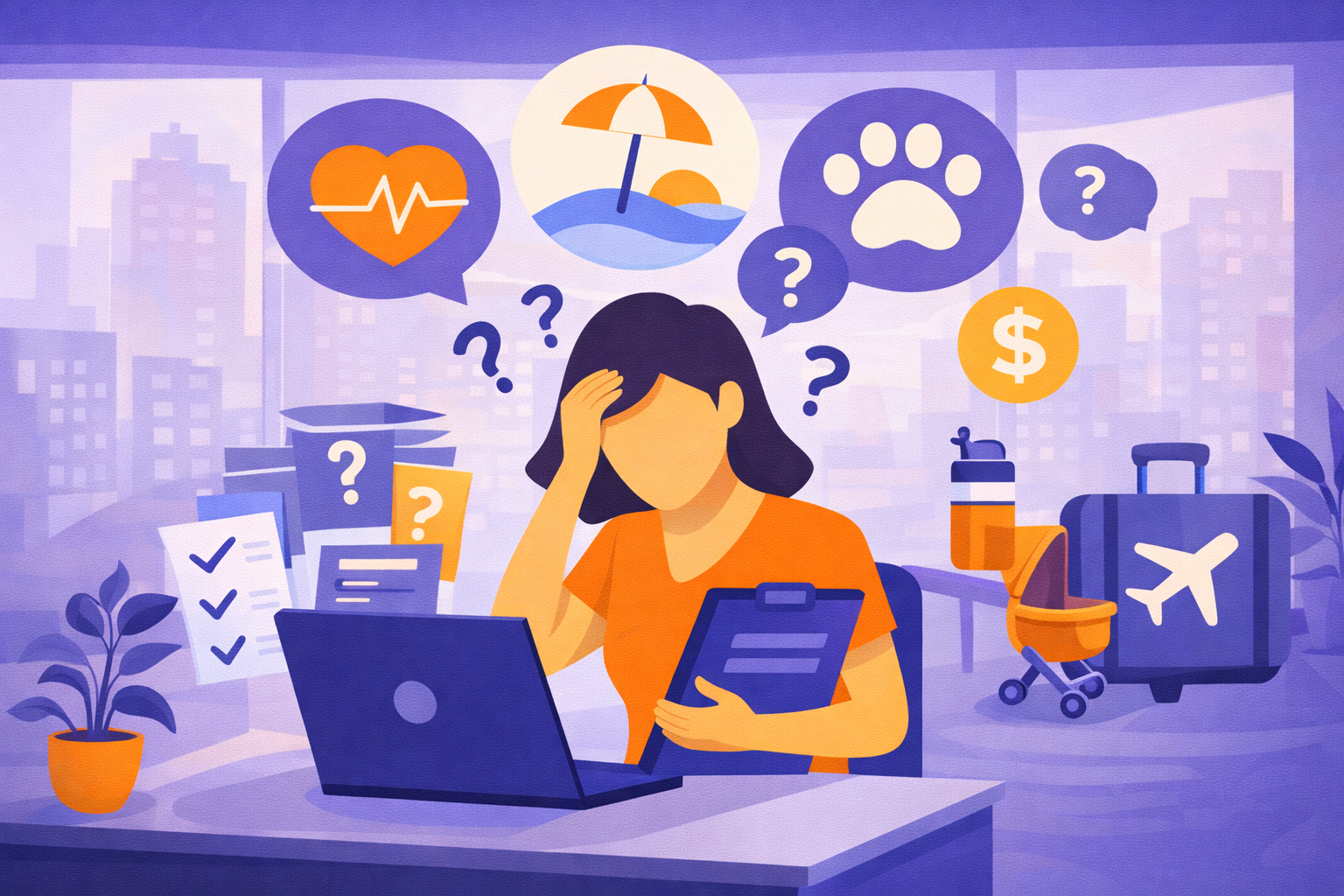
Great HR teams want to do right by their people.
You want benefits that employees actually use, programs that feel modern and human, and solutions that support real life — not just check a box.
The challenge isn’t intention. It’s capacity.
HR leaders today are balancing engagement, retention, compliance, growth, and culture — often with lean teams and limited time. That’s why any new benefit has to pass a simple test.
Will this actually make things better — without making my job harder?
That’s exactly where flexible lifestyle benefits stand out.
When implemented thoughtfully, they don’t add work. They replace complexity, eliminate guesswork, and give HR teams a scalable way to support employees — without constant oversight.
This guide shows how to implement flexible lifestyle benefits in a way that feels energizing for HR, valuable for employees, and sustainable for growing teams.
Why Flexible Lifestyle Benefits Matter So Much to HR Teams
Before we talk implementation, it’s important to understand why this benefit category is uniquely powerful from an HR perspective — not just an employee one.
1. They Solve Multiple HR Problems at Once
Most HR initiatives address one issue at a time:
- Engagement programs focus on morale
- Benefits focus on coverage
- Retention initiatives focus on compensation
Flexible lifestyle benefits cut across all three.
They:
- Increase benefits utilization (employees actually use them)
- Improve engagement (choice drives participation)
- Support retention (employees feel understood and valued)
For HR leaders juggling limited time and budget, few programs deliver this much leverage.
2. They Reduce “Benefits Guesswork”
Traditional benefits force HR to guess:
- Which perks employees want
- Which ones will be used
- Which ones justify the cost
That guesswork leads to wasted spend and low adoption.
Flexible lifestyle benefits remove the guessing entirely.
Instead of HR deciding what employees should value, employees decide for themselves. HR sets the framework and budget — employees personalize the experience.
Less guessing. Fewer complaints. Better outcomes.
3. They Scale With the Complexity of Modern Work
HR teams are managing:
- Distributed and hybrid workforces
- Multiple generations with different needs
- Caregiving, wellness, and burnout concerns
Trying to cover all of that with individual perks is impossible.
Flexible lifestyle benefits scale naturally because one program supports many needs — without adding new vendors, policies, or workflows.
The Biggest Implementation Fear (And Why It’s Usually Wrong)
The most common HR concern is simple:
“This sounds like a lot to manage.”
That fear usually comes from experiences with older, manual reimbursement programs or fragmented perk platforms.
Modern flexible lifestyle benefits platforms are designed specifically to remove administrative burden by:
- Automating allowances and approvals
- Centralizing employee usage and reporting
- Providing guardrails around eligible categories
When implemented correctly, HR’s role becomes oversight, not micromanagement.
How to Implement Flexible Lifestyle Benefits Without Extra HR Work
Here’s what a low-lift, HR-friendly rollout actually looks like.
Step 1: Set a Clear, Predictable Budget
This is where HR maintains full control.
Decide:
- Monthly or annual allowance per employee
- Whether all employees receive the same amount
- When benefits activate (e.g., day one or after a waiting period)
Predictable budgets mean:
- No surprise costs
- Easy forecasting
- Clear communication to leadership
Flexible benefits don’t mean flexible spending limits.
Step 2: Choose a Platform Built for HR (Not Just Employees)
Not all benefits platforms are created equal.
HR-friendly platforms should:
- Automate tracking and reporting
- Minimize manual approvals
- Provide visibility without daily oversight
- Integrate cleanly into existing workflows
The goal is one system, not another thing to manage.
Step 3: Define Simple, Broad Categories
Overly complex rules create confusion and tickets.
The most successful programs use broad, intuitive categories like:
- Wellness & fitness
- Learning & development
- Family & caregiving
- Lifestyle & experiences
Clarity upfront dramatically reduces employee questions later.
Step 4: Communicate Once — Then Let the Platform Do the Work
HR shouldn’t have to repeatedly explain how a benefit works.
A strong rollout includes:
- A simple launch message
- Clear examples of eligible uses
- A self-serve employee experience
After that, the platform handles the day-to-day.
Step 5: Monitor Usage, Not Individuals
Flexible lifestyle benefits aren’t about policing spend.
They’re about understanding patterns:
- Which categories are most used
- Where employees find the most value
- How engagement changes over time
This insight helps HR improve benefits strategy — without chasing receipts or managing exceptions.
Where LIVD Makes This Easy for HR
LIVD was built specifically for lean HR teams.
We focus on:
- Minimal setup
- Predictable budgets
- Clear employee choice
- Centralized management
HR leaders don’t need another system to babysit.
With LIVD, flexible lifestyle benefits run in the background — while employees feel the impact every day.
The Takeaway for HR Leaders
Flexible lifestyle benefits aren’t more work.
They’re less work with better results.
When implemented thoughtfully, they:
- Replace multiple low-impact perks
- Reduce benefits waste
- Improve engagement and retention
- Give HR leaders a scalable, future-proof program
For HR teams under constant pressure to do more with less, flexible lifestyle benefits aren’t just manageable — they’re one of the smartest moves you can make.
If you’re ready to support your employees without adding to your workload, flexible lifestyle benefits are the way forward.